
Description
By (author) McKenzie, Kenneth F.; Foreword by Mattis, James N.
Short /annotation:
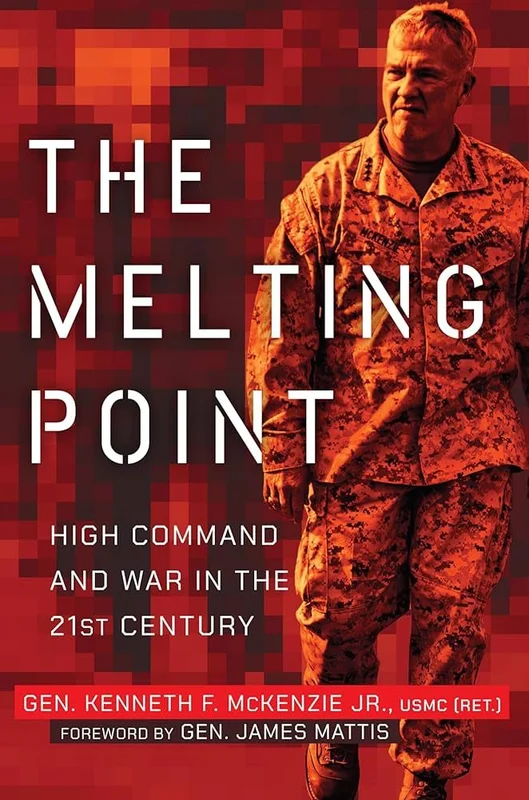
As the Commander of US Central Command, General Frank McKenzie oversaw some of the most important – and controversial operations in modern US military history. In this volume he provides an honest assessment of his time in command, offering a vivid portrait of leadership in action in one of the most volatile regions of the world.
:
As the Commander of U.S. Central Command, General Frank McKenzie oversaw some of the most important — and controversial operations in modern U.S. military history. He had direct operational responsibility for the strikes on Qassem Soleimani and two successive leaders of ISIS, the many months of deterrence operations against Iran and its proxies, and the methodical drawdown in Iraq. He directed the noncombatant evacuation operation in Afghanistan, and our final withdrawal from that tortured country.
The Melting Point has three themes. The first one is the importance of the primacy of civilian control of the military. It has become a widely perceived truth that this control has been eroded over the past few years. General McKenzie doesn’t believe that to be the case, and he speaks with some authority on the matter arguing that the civ-mil relationship isn’t perfect or frictionless, but it doesn’t have to be, and probably shouldn’t be. It is, however, more durable than many believe, and is supported and embraced by the military to a degree that some critics do not choose to recognize.
The second theme is the uniqueness of being a combatant commander. Combatant commanders participate in the development of policy, although as junior partners. They are also responsible for the execution of policy once civilian leaders have formulated their decision, a unique position, and very different than the role of a service chief, or even the Chairman of the Joint Chiefs of Staff. None of these officers are in the chain of command, and they have no ultimate, mortal responsibility or authority for execution. Only the combatant commander stands astride the boundary of decision-making and execution.
Finally, the third theme that McKenzie argues is that leaders matter, and the decisions they make have a profound effect on what happens on the battlefield. McKenzie provides an honest assessment of his time in command—describing decisions that were sound, as well as some outcomes he wishes were different. He offers a vivid portrait of leadership in action in one of the most volatile regions of the world.
Review quote:
“If we didn’t have a leatherneck warrior-scholar like Frank McKenzie, we would have to invent one. Through the lens of his last twenty years of military service Frank brings us to a realization of the complexities of a senior officer’s life. From the sausage-making of defense policy to the gut-wrenching decisions that affect young service members’ lives, General McKenzie bares it all. Unsparing in his observations, even when it affects himself negatively, he makes clear to us the understanding that life as a combatant commander is one of constant second guessing, no spare time, and a constant lack of perfect knowledge. He lived with terrorism and terrorists and was the decision maker for the notable elimination of several of the most bloody minded of these miscreants. General McKenzie makes it clear that, notwithstanding the improvements in intelligence and communication, a commander needs today what military leaders have always relied upon—experience, trust in subordinates, and a gut instinct. Thank God General McKenzie was there for us at a most perilous time for this nation and followed his gut.”—Ambassador Richard Armitage, former Deputy Secretary of State and Assistant Secretary of Defense for International Security Affairs
“Adeeply relevant and important book in understanding contempo




Reviews
There are no reviews yet.