
Description
Edited by Conlin Jonathan
Short /annotation:
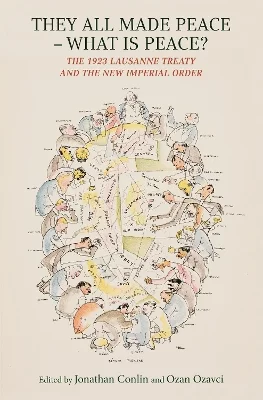
They All Made Peace- What is Peace? is the first publication to consider the Treaty of Lausanne in 1923 and its legacy a century on. A stellar group of historians present a contrapuntal, multi-perspective analysis of the events.
:
The 1923 Treaty of Lausanne may have been the last of the post-World War One peace settlements, but it was very different from Versailles. Like its German and Austro-Hungarian allies, the defeated Ottoman Empire had initially been presented with a dictated peace in 1920. In just two years, however, the Kemalist insurgency turned defeat into victory, enabling Turkey to claim its place as the first sovereign state in the Middle East. Meanwhile those communities who had lived side-by-side with Turks inside the Ottoman Empire struggled to assert their own sovereignty, jostled between the Soviet Union and the resurgence of empire in the guise of League of Nations mandates. For 1.5m Ottoman Greeks and Balkan Muslims, ‘making peace’ involved forced
population exchanges, a peace-making tool now understood as ethnic cleansing. Chapters consider competing visions for a postOttoman world, situate the population exchanges relative to other peace-making efforts, and discuss economic factors behind the reallocation of Ottoman debt as well as refugee flows and oil politics. Further chapters consider Arab, Armenian, American and Iranian perspectives, as well as the long shadow cast by Lausanne over contemporary politics, both inside Turkey and out.
Table of contents:
Contents
Part 1: From One Imperial Order to Another
Minority Rights and International Law at Lausanne – Aimee Genell
Britain’s Plans for a New Eastern Mediterranean Empire, 1916-1923 – Erik Goldstein
On the Margins of the Lausanne Conference: The Soviet Union and the Exclusions of the post-World War I International Order – Samuel Hirst & Etienne Peyrat
The Lausanne Treaty in the Contested Narratives of World Politics– Cemil Aydın
Part 2: Absent Presences
Debates over an Armenian National Home at the Lausanne Conference and the Limits of Post-Genocide Co-Existence – Lerna Ekmekçioglu
Iranian Attempts to Participate in the Lausanne Conference – Leila Koochakzadeh
Arab Exclusion at Lausanne: A Critical Historical Juncture – Elizabeth F. Thompson
Part 3: Making Concessions
Oil over Armenians: The 1920s ‘Lausanne Shift’ in US Relations with the Middle East– Andrew Patrick
The Mosul Question: Lausanne and After – Sarah Shields
Turkey and the Division of the Ottoman Debt at Lausanne – Patrick Schilling & Mustafa Aksakal
Part 4: Moving the People
International Law and the Greek-Bulgarian and Greek-Turkish Population Exchanges– Leonard V. Smith
A Capitalist Peace? Money, Labor, and Refugee Resettlement – Laura Robson
At the Crossroads of History:Thanassis Aghnides, Ayrilios Spatharis and the Greek-Turkish Population Exchange – Haakon Ikonomou & Dimitris Kamouzis
Part 5: Framing Lausanne
Framing Pasts and Futures at the Lausanne Near East Peace Conference – Hans-Lukas Kieser
Lausanne in Turkish Official and Popular Historiography: A ‘War of Identities’ in Turkey – Gökhan Çetinsaya
Diplomacy, Entertainment, Souvenir? Guignol à Lausanne (1922) and the Lausanne Conference in Caricature – Julia Secklehner
Review quote:
‘They All Made Peace—What is Peace? is a welcome addition to the literature on the 1923 Lausanne Treaty and the impact of the decisions made there that continue to resonate in present-day international politics. Long overdue, the volume represents a primer on a neglected and under-represented moment of post-imperial Ottoman history.’ Virginia H. Aksan Professor of History Emeritus, McMaster University; ”Of all the international t
Reviews
There are no reviews yet.