
Description
By (author) Cerioli, Luíza
Short /annotation:
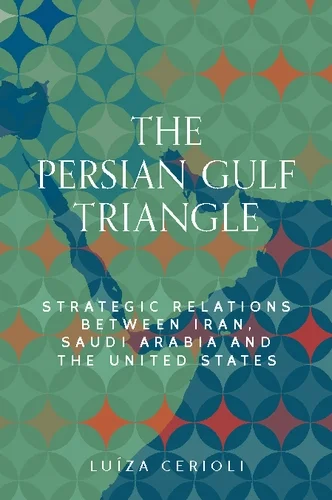
This book explores the relations between Iran, Saudi Arabia, and the United States through a Neoclassical Realist framework and shows how their dynamic has affected the Persian Gulf regional system and its international relations from the 1970s until today.
:
This book offers a nuanced snapshot of the complex geopolitical dynamics in the Persian Gulf, underlining the interaction between Iran, Saudi Arabia, and the US. Examining their interwoven relations since the 1970s, Luíza Cerioli”s framework reveals how changes in US-Saudi ties have ripple effects on Iran-US and Iran-Saudi relations and vice versa. Using a historical lens, she explores how enduring US-Saudi connections hinge on order expectations, delves into the cognitive factors shaping US-Iran enmity and traces the source of oscillation in the Saudi-Iran ties. Employing Neoclassical Realism, the book investigates status-seeking, national identities and leadership preferences, offering a deeper understanding of the region”s multipolar system. By combining International Relations and Middle East Studies, Cerioli”s work contributes to both fields, unravelling the intricate interplay between international structures, regional nuances and agency in shaping Persian Gulf geopolitics.
Table of contents:
Introduction
1 The Persian Gulf Regional System: Iran, Saudi Arabia, and the United States as regional actors
2 Neoclassical Realism and the Iran–US–Saudi Arabia triangle
3 The ménage à trois triangle (1969 to 1979): The Twin Pillar Diplomacy revisited
4 The stable marriage triangle (1979 to 1989): Consolidation of the Carter Doctrine
5 The romantic triangle (1989 to 2003): The Saudi–Iranian rapprochement
6 The stable marriage revised (2003 to 2014): Establishing a new rivalry
Conclusion
Biographical note:
Luíza Cerioli is a Political Science Researcher at the University of Kassel.
Primary cover copy:
A snapshot of the Persian Gulf today shows the prominence of Iran, Saudi Arabia and the United States. This book argues that the relations between these countries have been interweaved since the 1970s.
The Persian Gulf triangle illustrate how a change in the ties between Saudi Arabia and the United States has spillover effects on the Iran-US or the Iran-Saudi Arabia ties and vice-versa. Through a historical perspective, the author explains how the durability of the US-Saudi ties is linked to expectations concerning the order; how different cognitive aspects shape the long-standing enmity between the US and Iran; and how the Saudi and Iran ties have swung back and forward from rapprochement to rivalry due to varying threat perceptions. This innovative approach exposes patterns of interaction that are otherwise hidden, bringing more nuance to our understanding of the region. The Persian Gulf is presented as a dynamic multipolar system marked by power asymmetries, religion, oil wealth, militarisation and foreign interference.
The book employs Neoclassical Realism to show how structure and agency matter when grasping the Middle East’s international politics. It delves into ideological ambitions, status-seeking behaviour, national identities and leadership preferences to explain how decisions are taken in foreign policy and grand strategy. The Persian Gulf triangle contributes to the progress of both the International Relations and Middle East Studies discipline, combining knowledge from the two fields in a rewarding analysis in which the international system creates conditions, but outcomes are shaped by regional particularities.


Reviews
There are no reviews yet.