
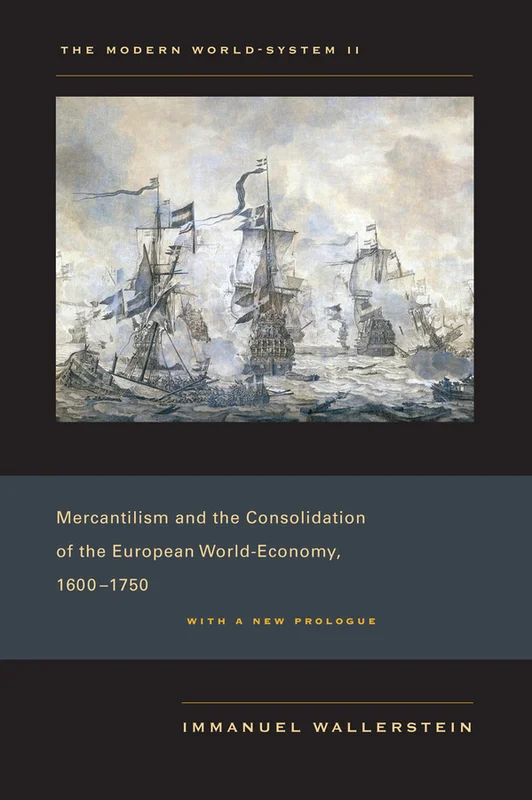
Description
By (author) Wallerstein, Immanuel
Short /annotation:
A panoramic reinterpretation of global history, this title traces the emergence and development of the modern world from the sixteenth to the twentieth century.
:
Immanuel Wallerstein”s highly influential, multi-volume opus, “The Modern World-System”, is one of this century”s greatest works of social science. An innovative, panoramic reinterpretation of global history, it traces the emergence and development of the modern world from the sixteenth to the twentieth century.
Table of contents:
List of Illustrations
Acknowledgments
Prologue to the 2011 Edition
Introduction: Crisis of the seventeenth century?
1. The b-phase
2. Dutch hegemony in the world economy
3. Struggle in the core—phase i: 1651–1689
4. Peripheries in an era of slow growth
5. Semipheripheries at the crossroads
6. Struggle in the core—phase ii: 1689–1763
Bibliography
Index
Review quote:
“However one casts up the balance-sheet on Wallerstein’s second volume, his effort commands respect and justifies interest in the volumes to follow.”
Review quote:
“An exciting and highly intelligent book. . . . The staggering pace at which Wallerstein moves over different levels of explanation, and skillfully combines them into his argument, deserves admiration.”
Review quote:
“In this age of high specialization, Wallerstein”s ambitious but judicious synthesis will command the respect of any scholar who has tried to grapple with the peculiarly intractable problems of this period. . . . the book is shot through with shrewd and often stimulating comment.”
Biographical note:
Immanuel Wallerstein is Senior Research Scholar at Yale University and the former President of the International Sociological Association. He is the author of many books, including, most recently, World-Systems Analysis: An Introduction and European Universalism: The Rhetoric of Power.
Primary cover copy:




Reviews
There are no reviews yet.